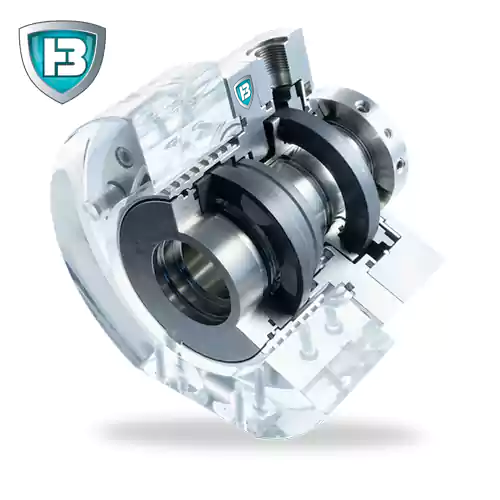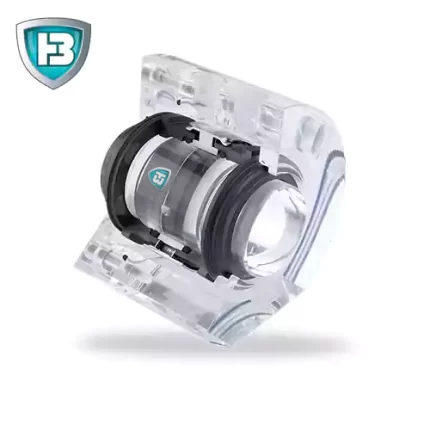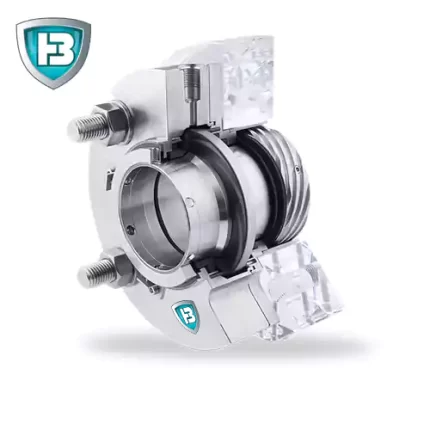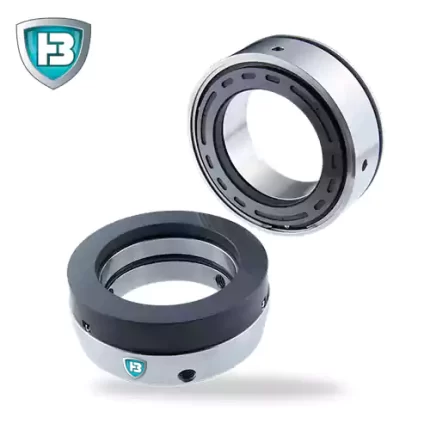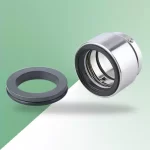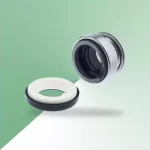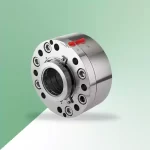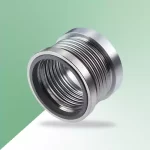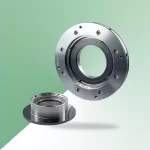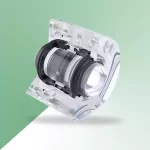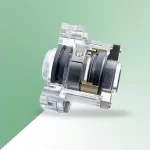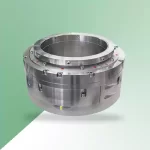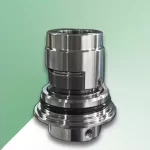

Mechanical Seal HRGS-D

Type in the H-Brinker HBRGS-D

HRGS-D Operating range

  • Shaft diameter: ±dw = 20 … 200 mm (0.787″… 7.874″)
  • Pressure HRGS-DC: p1 = … 22 bar (319 PSI)
    p3 = … 25 bar (363 PSI)
  • Pressure HRGS-DD: p1 = … 40 bar (580 PSI)
    p3 = … 43 bar (624 PSI)
  • Operating temperature limits for:
    EPDM -20 °C … +140 °C (-4 °F … +284 °F)
    FFKM -20 °C … +120 °C (-4 °F … 248 °F)
    FKM -20 °C … +170 °C (-4 °F … 338 °F)
  • Sliding velocity: vg = 4 … 25 m/s (13 … 82 ft/s)
  • Differential pressure Δp = min. 3 bar (44 PSI), max. 16 bar (232 PSI) (internal pressure)
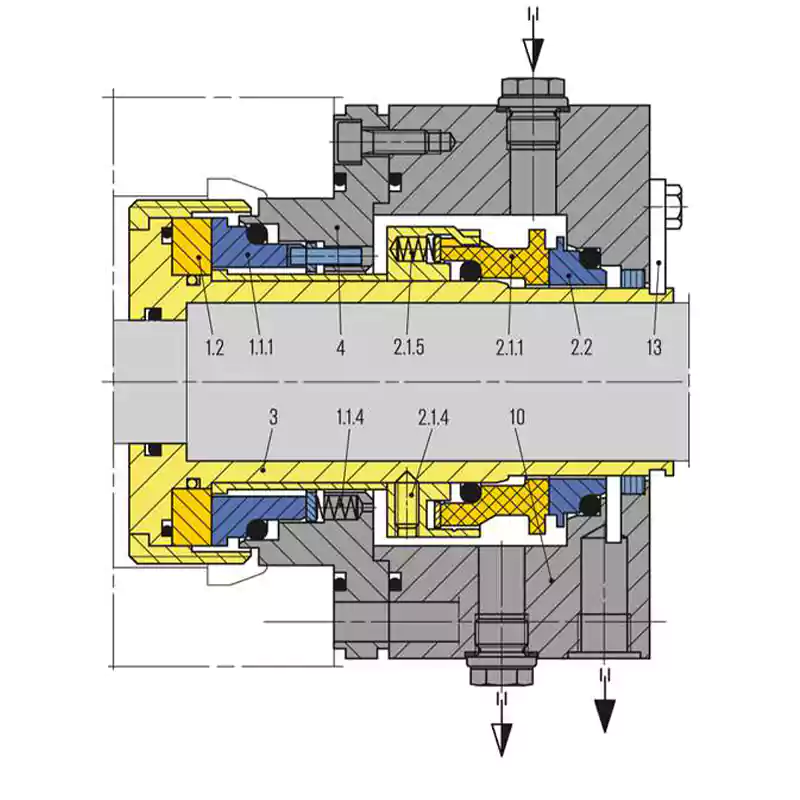
Description
ItemPart no.
DIN 24250
Description
1.1.1472.1Seal face
1.1.4477Spring
1.2475.1Seat
2.1.1472.2Seal face
2.1.4485Drive collar
2.1.5477Spring
2.2475.2Seat
3523Shaft sleeve
4513Insert
10441Housing
13 Assembly fixture

Seal HRGS-D Features (HBRGS-D)

  • Double seal
  • Balanced
  • Standard version with
  • U-grooves (bi-directional)
  • Gas-lubricated

Seal HRGS-D Material

  • Product side (HRGS-DC, HRGS-DD):
  • Seal face: Silicon carbide (Q19, Q29)
  • Seat: Silicon carbide (Q1, Q2)

    Atmosphere side HRGS-DC:

  • Seal face: Carbon graphite antimony impregnated (A), Carbon graphite resin impregnated (B)
  • Seat: Silicon carbide (Q1, Q2)

    Atmosphere side HRGS-DD:

  • Seal face: Silicon carbide (Q19, Q29)
  • Seat: Silicon carbide (Q1, Q2)
  • Springs: CrNiMo steel (G), Hastelloy® C-4 (M)
  • Metal parts: CrNiMo steel (G), Hastelloy® C-4 (M)

Seal HRGS-D Advantages (HBRGS-D)

  • Contact-free operation
  • Suitable for solids containing media
  • Internally pressurized
  • Cartridge unit
  • Does not open in the event of buffer pressure failure, self closing at pressure reversal
  • HR principle with rotating seat
  • No friction on the seal faces, no heat generated at the seal or in the medium

Seal HRGS-D Recommended applications

  • Chemical industry

  • Refining technology

  • Gases and liquids

  • Media which require high purity

  • Environmental harmful media

  • Pumps